
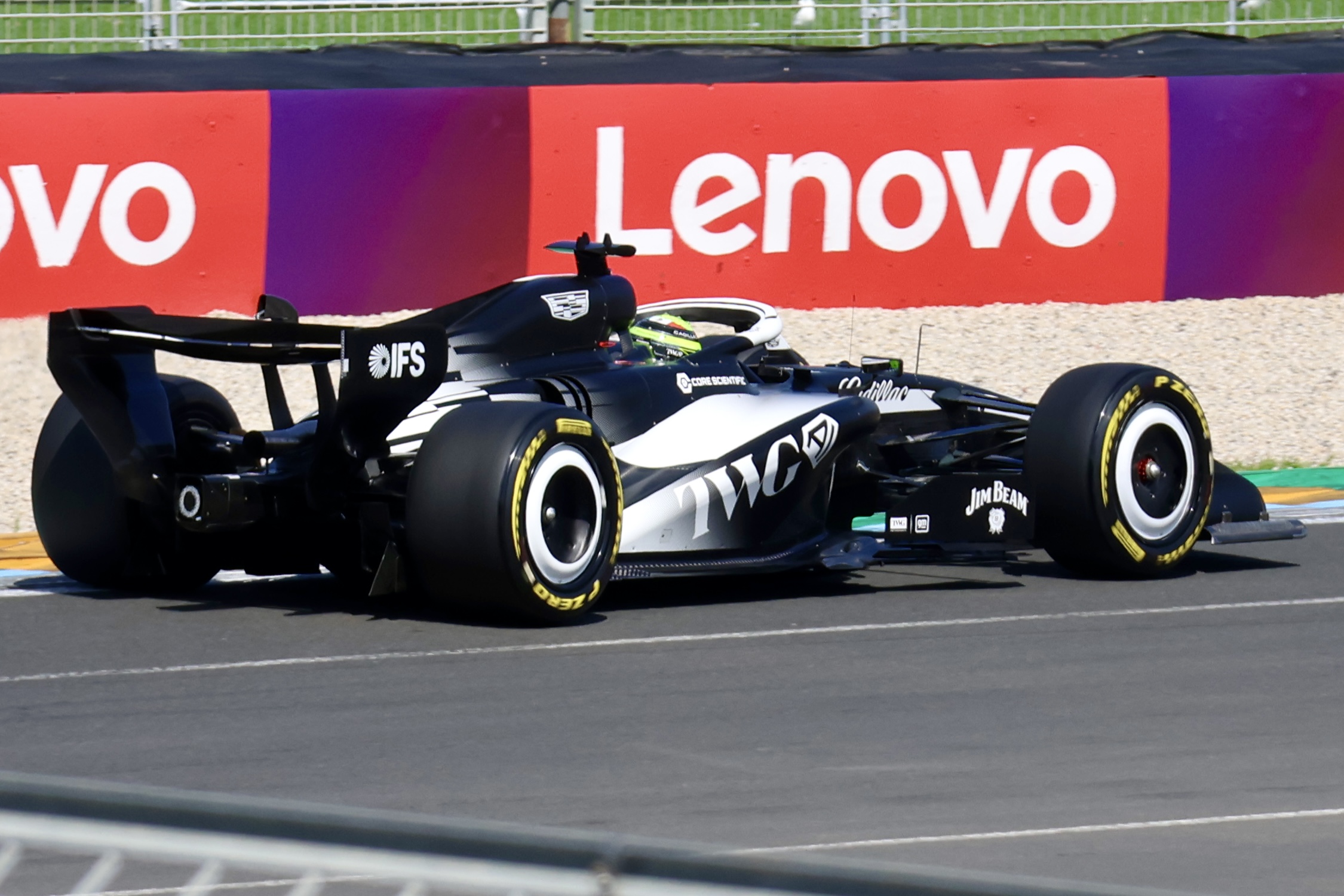
Monaco has a long memory for drama — and on Friday afternoon at the 2026 Monaco Grand Prix, Sergio Perez wrote himself into its latest chapter. With barely two minutes left in Free Practice 2, smoke began filling the Mexican driver’s cockpit as his Cadillac ground to a halt at Casino Square, front-right brake ablaze. It was a moment that raised eyebrows across the paddock — but for Perez, the fire in his brake ducts has done nothing to douse his ambition heading into qualifying.
A Session That Ended in Flames
FP2 at Monaco had already been a scrappy affair before Perez brought it to its fiery conclusion. The session had seen two earlier interruptions — including Lando Norris grinding to a halt at the Nouvelle Chicane with a mechanical failure on his McLaren — but nothing quite matched the spectacle of Perez’s Cadillac arriving at Casino Square trailing a plume of smoke.
As the front-right brake assembly caught fire, Perez pulled the car into the runoff area. The narrow slope at Casino presented a brief challenge as marshals moved quickly to chock the wheels and prevent the car from rolling, before extinguishing the blaze. Perez stepped out calmly. The Cadillac, thankfully, sustained minimal damage.
The third red flag of the session was thrown. When the track went green again, less than two minutes remained — enough time for teams to complete a practice start, nothing more. FP2 was effectively over.

The Bigger Picture: Cadillac’s Reliability Question
The Monaco brake fire does not arrive in isolation. Cadillac’s debut 2026 season — adapting to the most transformative regulatory overhaul in F1’s modern era while running Ferrari power under an agreement that bridges the gap until General Motors fields its own power unit from 2029 — has been a steep learning curve. For a team built from scratch and thrust onto one of motorsport’s most demanding circuits, reliability incidents are an occupational hazard of the first year.
But they are also expensive ones. Each reliability failure consumes engineering hours, spare parts inventory, and crucially, practice time that a new team can ill afford to lose. Monaco, with its unforgiving walls and minimal overtaking, places an even higher premium on clean running in free practice — every lap matters for setup confidence and tyre understanding.
Perez finished FP2 classified 18th, 2.090 seconds off Lewis Hamilton’s session-topping time. On a day when Ferrari dominated — Hamilton led Leclerc in a 1-2 sweep, with Verstappen third — the gap to the front reflects Cadillac’s position as a developing team rather than any single mechanical failure. But incidents like this one compound the challenge of building competitive data across a race weekend.
Perez Undeterred: Cadillac’s Q2 Target Remains
If the smoke was supposed to signal defeat, no one told Checo. Despite the dramatic end to FP2, Perez went on record targeting a landmark result for the team in Saturday’s qualifying — Cadillac’s first-ever Q2 appearance in Formula 1. Having posted P14 in FP1, and with the team showing incremental progress through each race weekend, the confidence is not entirely without basis.
Monaco’s qualifying format historically produces surprises. The street circuit’s narrow layout limits the impact of raw pace and elevates the premium on clean laps, track positioning, and nerve. For a driver of Perez’s experience — six Grand Prix victories, multiple seasons as a race-winning force at Red Bull — the psychological demands of Monaco are well within his wheelhouse, even if the machinery is not yet matching his ambitions.

What This Means Going Forward
For Cadillac, the Monaco weekend is a microcosm of the broader challenge that defines any new F1 constructor’s debut campaign. The team must simultaneously manage the operational demands of race weekends, absorb the commercial pressure of being the sport’s newest marquee entry, and develop a car that can eventually compete with the established order.
Brake fires are not uncommon in Formula 1 — they are an inherent risk when braking systems are pushed to their thermal limits on street circuits. But for a team still calibrating its setup baseline, an incident like Monaco’s FP2 carries a disproportionate cost: lost running, lost data, and the psychological weight of headlines that focus on smoke rather than speed.
Perez, for his part, appears to be taking it in stride. If the team can extract a Q2 appearance from what remains of the Monaco weekend, the brake fire will become a footnote rather than a chapter. If not, it reinforces a narrative around Cadillac’s reliability that the team will be keen to rewrite before the summer.
Images: Cadillac MAC-26 at the 2026 Australian Grand Prix © Yu Chu Chin (Pangalau) / Wikimedia Commons, CC BY-SA 4.0. Perez at 2026 Chinese GP FP1 © Liauzh / Wikimedia Commons, CC BY 4.0. Used with attribution under Creative Commons licence.
RECENT POST
- Where There’s Smoke: Perez’s Brake Fire Brings Monaco FP2 to a Blazing Halt
- 2026 Canadian Grand Prix Results: Antonelli Wins Again as Russell’s Lead Slips Away
- Toyota GR GT: Specs, Price and the Economics Behind Japan’s Most Ambitious Supercar
- Kimi Antonelli Becomes F1 Youngest Ever Polesitter in Stunning Qualifying
- Chinese GP Sprint Qualifying 2026: 7 Key Takeaways from Russell’s Dominant Mercedes Front-Row Lockout


Leave a Reply